School and university campuses face a difficult security challenge. They need to protect large numbers of students, employees, visitors, buildings, parking areas, and outdoor spaces without creating an environment where people feel constantly watched. As cameras become common across educational facilities, the question is shifting from whether campuses should use surveillance to how intelligently that surveillance should operate.
The scale of camera adoption is already significant. Data from the National Center for Education Statistics shows that about 95% of U.S. public schools use one or more security cameras. The same School Pulse Panel findings reported that 85% had electronic systems for notifying parents during school-wide emergencies and 83% had classroom doors that could be locked from inside. These figures show that modern campus safety increasingly depends on layers of technology rather than a single security measure.
Traditional cameras, however, create their own problem. Recording thousands of hours of footage does little during an unfolding incident if staff cannot identify the important few seconds quickly enough. At the same time, adding increasingly powerful surveillance raises legitimate concerns about tracking students, storing identifiable footage, false alerts, and unnecessary monitoring.
AI video analytics may help solve the first problem, but only thoughtful implementation can address the second. The real opportunity is to make cameras more useful while establishing clear limits on what should be analyzed, retained, and accessed.
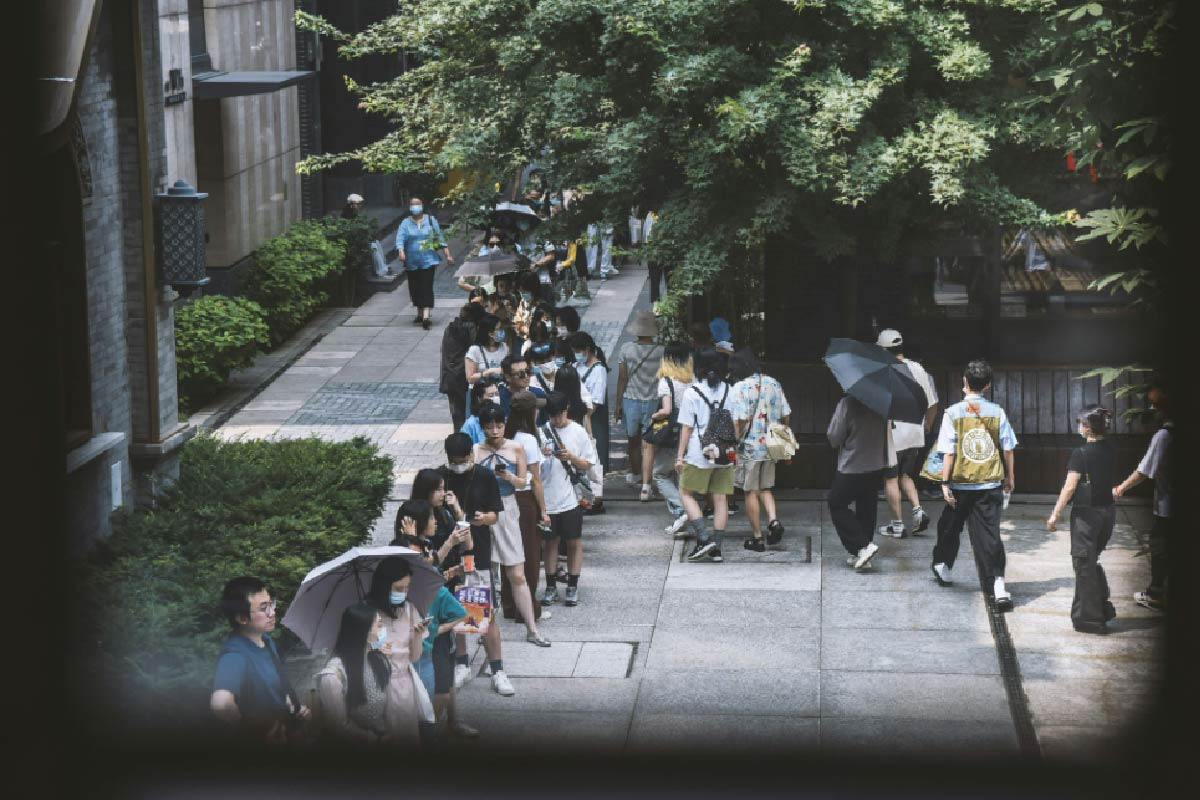
From Passive Recording to Active Safety Awareness
Traditional campus surveillance has largely been retrospective. Cameras record an event, and administrators return to the footage later after receiving a report about vandalism, unauthorized access, a fight, or another incident.
AI changes that workflow by analyzing video as it is generated. Depending on the system, analytics can distinguish people from vehicles, identify activity in restricted areas, recognize unusual movement, detect visible objects, or alert staff when predetermined conditions occur. Security teams can then focus on specific events instead of continuously watching banks of monitors.
That matters particularly on large campuses. North Little Rock School District in Arkansas, for example, operates roughly 800 cameras across 15 campuses. Its safety director explained that manually watching that number of feeds is effectively impossible, which is why the district has used AI capabilities to direct attention toward areas of concern.
The most important benefit is therefore not simply more surveillance. It is attention management. A useful analytics system should help a small security team recognize situations that deserve human review while allowing ordinary campus activity to pass without intervention.
Faster Detection Still Requires Human Judgment
AI can reduce the time between an incident appearing on camera and someone becoming aware of it. That can matter during emergencies where minutes, or even seconds, affect the quality of the response.
Oak Lawn High School District 229 in Illinois introduced an AI system in 2025 that analyzes existing security camera feeds for visible firearms. Importantly, a potential detection is sent to a human expert for verification before first responders are contacted. The approach demonstrates an important principle for campus AI: detection and decision-making do not have to be the same thing.
Human verification is especially important because computer vision is not infallible. Lighting, distance, blocked camera views, unusual objects, crowds, and poor image quality can affect what an algorithm sees. Oak Lawn’s deployment also attracted discussion about both accuracy and privacy, illustrating why schools should evaluate the consequences of false positives as carefully as detection speed.
A responsible system should therefore act more like an intelligent filter than an autonomous security officer. AI can surface a possible problem, provide the relevant footage, and help staff understand the situation faster. Trained people should still make decisions that could affect students, trigger disciplinary action, or involve law enforcement.
Connecting Video Analytics With the Wider Campus Security Ecosystem
Video becomes considerably more useful when administrators can connect what a camera sees with information from other safety systems. An alert from a restricted entrance, for example, becomes easier to investigate when the relevant camera view is immediately available instead of requiring staff to search multiple systems.
This type of integration can also reduce unnecessary monitoring. Instead of asking employees to continuously watch corridors, entrances, and parking areas, systems can focus attention around defined security events such as a door being forced open, activity in a restricted location, or another predetermined condition.
As an example of how video analytics tools are developing, Coram describes its platform as combining AI video with access control and emergency response. According to the supplied Coram page, the system can connect with ONVIF-compliant IP cameras, provide natural-language video search, generate real-time alerts for events including firearms and unauthorized entry, and associate access-control events with synchronized video. This illustrates how analytics can help turn existing camera footage into information that security teams can search and investigate more efficiently rather than requiring constant manual review.
For campuses, however, integration should always follow policy rather than define it. Connecting more systems does not automatically justify collecting more information. Administrators should first determine which events genuinely require monitoring and then configure technology around those specific safety needs.
Improving Response Without Monitoring Every Student
One of the strongest arguments for AI analytics is that it may allow campuses to become more selective rather than more intrusive. A system designed around events can potentially reduce the need for staff to observe normal student activity continuously.
Real deployments show how this can work. Monterey Peninsula Unified School District in California uses intelligent video capabilities while deliberately restricting camera placement. Cameras were not installed in classrooms or bathrooms, while coverage was focused on areas where security visibility was considered necessary. District officials also reported that schools experiencing vandalism saw changes after upgrading their camera infrastructure.
Hernando County School District in Florida provides another example of technology supporting faster response. During an intruder drill, its integrated security infrastructure identified the location of a staged intruder, and a school resource officer reached the individual in 45 seconds. The district also uses approximately 2,000 cameras alongside access control, intercoms, and other security systems.
These examples show why the value of AI should be measured in outcomes such as faster verification, better situational awareness, and reduced investigation time rather than simply counting the number of cameras or alerts. More monitoring is not necessarily better monitoring.
Privacy Must Be Designed Into Campus Analytics
The largest challenge is determining where legitimate safety monitoring ends and excessive surveillance begins. AI systems can make video easier to search and interpret, which means organizations need stronger rules governing who can access footage and why.
Student video can also carry legal implications. U.S. Department of Education guidance explains that a school video may qualify as an education record under FERPA when it is directly related to a student and maintained by the educational institution. For example, surveillance footage focused on students involved in a disciplinary incident may fall into this category. Different rules can apply to records created and maintained by a school’s law enforcement unit for law enforcement purposes.
Privacy protections should therefore begin before the software is activated. Schools and universities should define appropriate camera locations, specify exactly which analytics are necessary, restrict access to authorized personnel, establish retention periods, document when footage can be shared, and regularly review how alerts are handled. Technologies involving biometric identification or persistent individual tracking deserve even greater scrutiny because they can fundamentally change the nature of surveillance.
Transparency matters as well. Students, parents, employees, and faculty should understand the purpose of the technology and the limits placed on its use. A campus that explains where cameras operate, what types of events are analyzed, how long information is retained, and who can see it is more likely to build trust than one that treats surveillance practices as invisible infrastructure.
Building a Safer Campus Without Creating a Surveillance Culture
The long-term test for AI video analytics will not be whether the technology can detect more things. It will be whether institutions can use detection selectively enough to improve safety without unnecessarily examining everyday student behavior.
That means separating safety use cases from general observation. Detecting activity around a restricted building after hours is very different from continuously analyzing how individual students move between classes. Investigating a specific reported incident is different from creating permanent behavioral profiles.
Human oversight should remain part of important decisions. Staff need training not only on how to operate analytics but also on when not to rely on them. Potential threats should be verified whenever circumstances allow, and an AI-generated alert should not automatically be treated as proof of misconduct.
Institutions should also evaluate performance after deployment. False alerts, missed incidents, response times, staff workload, privacy complaints, system access records, and investigation times can reveal whether the technology is producing genuine safety improvements. If an analytics feature creates little security value but significantly increases surveillance, administrators should be prepared to limit or disable it.
FAQs
What are AI video analytics tools used for on campuses?
They analyze camera footage to help identify events that may require attention. Depending on the system, this can include people or vehicles entering defined areas, unusual activity, visible threats, or specific events that security staff have configured for monitoring.
Can AI video analytics replace campus security personnel?
No. AI is better suited to helping security teams identify and investigate relevant events. Human personnel are still needed to verify alerts, understand context, communicate during emergencies, and make decisions that affect students or staff.
How can AI analytics improve response times?
Analytics can direct staff toward relevant footage instead of requiring them to monitor numerous feeds or manually search recordings. Faster awareness can give administrators and responders more time to evaluate what is happening and choose an appropriate response.
How can schools protect student privacy while using video analytics?
They can limit cameras to justified locations, avoid unnecessary analytics, restrict access to footage, establish retention rules, maintain audit trails, and require human review of consequential alerts. Institutions should also clearly explain their surveillance policies to their communities.
Does FERPA apply to security camera footage?
It can. U.S. Department of Education guidance says that video directly related to a student and maintained by a school may become an education record in certain circumstances. The status of footage depends on factors including why it was created, who maintains it, and how it is used.
Conclusion
AI video analytics can improve campus safety, but the strongest deployments are not those that monitor the most people. They are systems designed to help security teams notice meaningful events sooner, retrieve useful information faster, and respond with better context while leaving ordinary campus activity alone.
As these technologies become more capable, schools and universities will need to treat privacy as part of security rather than as a competing objective. Clear policies, limited data collection, human oversight, thoughtful camera placement, and measurable safety goals can allow campuses to gain the benefits of intelligent video without allowing safety technology to become unrestricted surveillance.
