
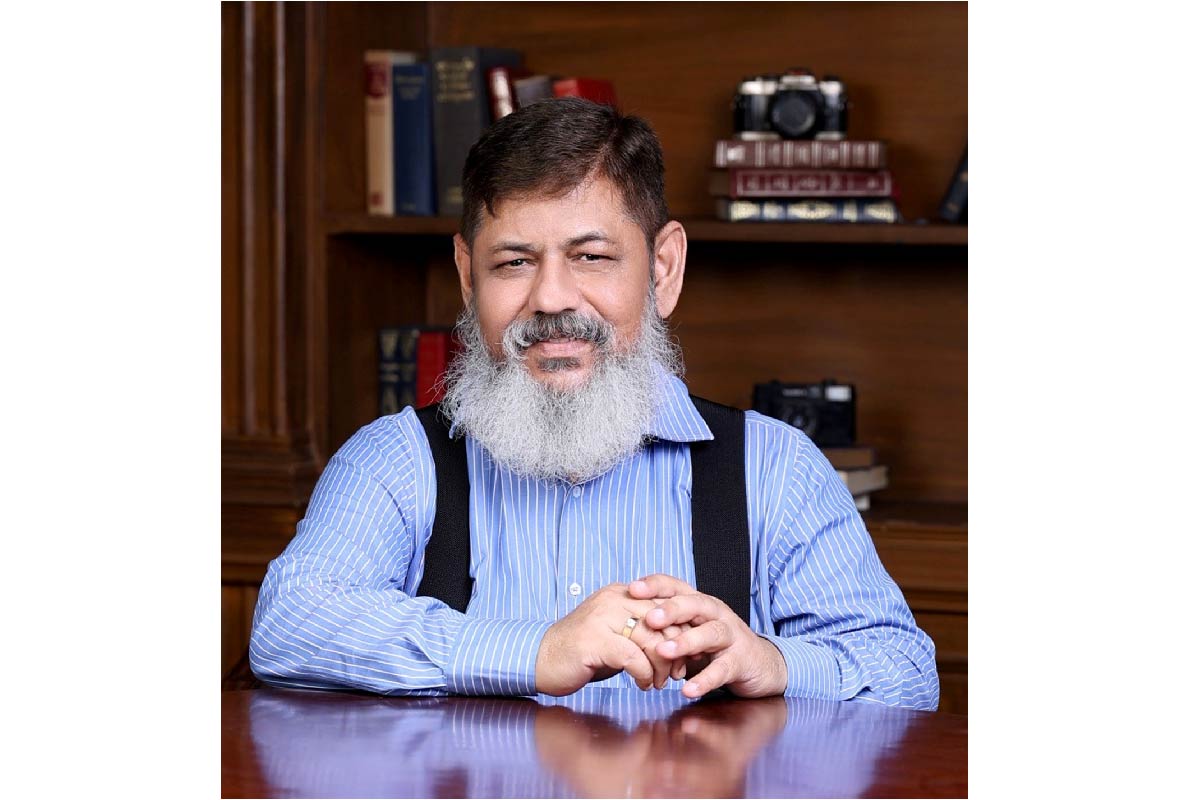
Hon. Prof. Dr. Dillip Kumar Dash, Senior Consultant Psychiatrist at Apollo Hospitals, Bilaspur, Chhattisgarh, India, has published an essay, “When the Person Disappears,” on Frontline Digest. The article appeared on 3 October 2026 and can be read at https://www.frontlinedigest.com/when-the-person-disappears/.
The piece is a reflection on psychiatric practice. Dash argues that, in some settings, the encounter is drifting from the person who is suffering toward the diagnosis, the prescription, and the economics of care. He does not reject diagnosis, medication, neuroscience, or evidence. He asks that those tools be kept in proportion, and that biography, culture, relationships, and the patient’s own account remain part of the clinical work.
Drawing on practice in Bilaspur, he notes patients who arrive already carrying several labels and several medicines, and treats that pattern as a clinical impression rather than a finding. He defends psychopharmacology as necessary, and deprescribing as a form of care. He questions the habit of turning ordinary sadness or anxiety into a disorder, and the simplified claim that depression is only a serotonin problem. The essay’s closing line is that a diagnosis is a map, not the territory, and that the person has to be found again if the care is to stay humane.
Frontline Digest is a media partner of the International Association for Quality Assurance in Pre-Tertiary and Higher Education (QAHE). Under that partnership, QAHE awardees and accredited institutions are charged US$15 + 5% for an approved article or research piece on Frontline Digest. Publication is subject to editorial acceptance. Gambling, drug, and adult-content links are not accepted.
Awardees and accredited institutions who wish to submit should write to admin@qahe.org with the article or research and a short note of their QAHE award or accreditation. The essay by Hon. Prof. Dr. Dash is a contribution by the author. It is not a QAHE clinical guideline, and it does not represent a position of Apollo Hospitals.
