
Environmental challenges are becoming increasingly complex as industries expand, cities grow, and natural resources face greater pressure. Water pollution, energy consumption, waste management, and sustainable infrastructure are among the issues requiring innovative engineering solutions. Addressing these problems demands professionals who understand both scientific principles and the practical realities of modern industrial operations.
Engineering education plays an important role in preparing the next generation to meet these responsibilities. Traditional technical knowledge remains essential, but future engineers must also develop critical thinking, problem-solving abilities, and an understanding of environmental regulations.
Universities and training institutions can support this development by connecting classroom learning with real-world challenges. Through practical projects, interdisciplinary collaboration, and exposure to emerging technologies, students can gain the skills needed to create solutions that balance industrial requirements with environmental protection.
Industrial Wastewater Treatment as a Practical Engineering Challenge
Water pollution provides an important example of the environmental challenges engineers must address. Industrial facilities generate wastewater containing different chemicals, organic compounds, suspended solids, and other contaminants that require appropriate treatment before discharge or reuse.
The petrochemical sector presents particularly complex conditions because wastewater composition can vary significantly between facilities and production processes. Hydrocarbons, phenols, dissolved substances, and high organic loads may require multiple treatment methods working together.
Understanding wastewater treatment petrochemical industry applications introduces engineering students to specialized treatment technologies, including biological processes, membrane bioreactors, and moving bed biofilm reactors. These systems demonstrate how chemical, biological, and mechanical engineering principles can be combined to address challenging industrial wastewater conditions.
A successful treatment design requires more than selecting appropriate equipment. Engineers must evaluate contaminant concentrations, wastewater flow, operating costs, treatment efficiency, and regulatory discharge limits.
These considerations make industrial wastewater management a valuable educational subject. Students can explore how technical decisions influence environmental outcomes while learning to balance performance, reliability, and economic feasibility.
Exposure to practical treatment challenges also encourages engineers to recognize that environmental protection depends on effective system design and ongoing operational management.
Developing Strong Foundations in Environmental Science
Engineering students need a solid understanding of environmental science to recognize how industrial activities affect natural systems.
Chemistry provides essential knowledge about pollutants, chemical reactions, and treatment processes. Biology helps explain microbial activity, ecosystem functions, and the biological mechanisms used in wastewater treatment.
Physics and mathematics support the analysis of fluid movement, energy transfer, equipment performance, and infrastructure design.
However, understanding these subjects individually isn’t enough. Environmental engineering frequently requires combining knowledge from several disciplines.
For example, designing a water treatment facility may involve chemical analysis, hydraulic calculations, biological treatment processes, and automated monitoring systems.
Universities can strengthen student understanding by presenting technical subjects through practical environmental problems rather than teaching every discipline in isolation.
Laboratory experiments, environmental sampling, and engineering simulations provide opportunities to connect theoretical concepts with measurable outcomes.
These experiences help students appreciate why environmental solutions must account for multiple interacting factors.
Using Digital Technology to Improve Environmental Solutions
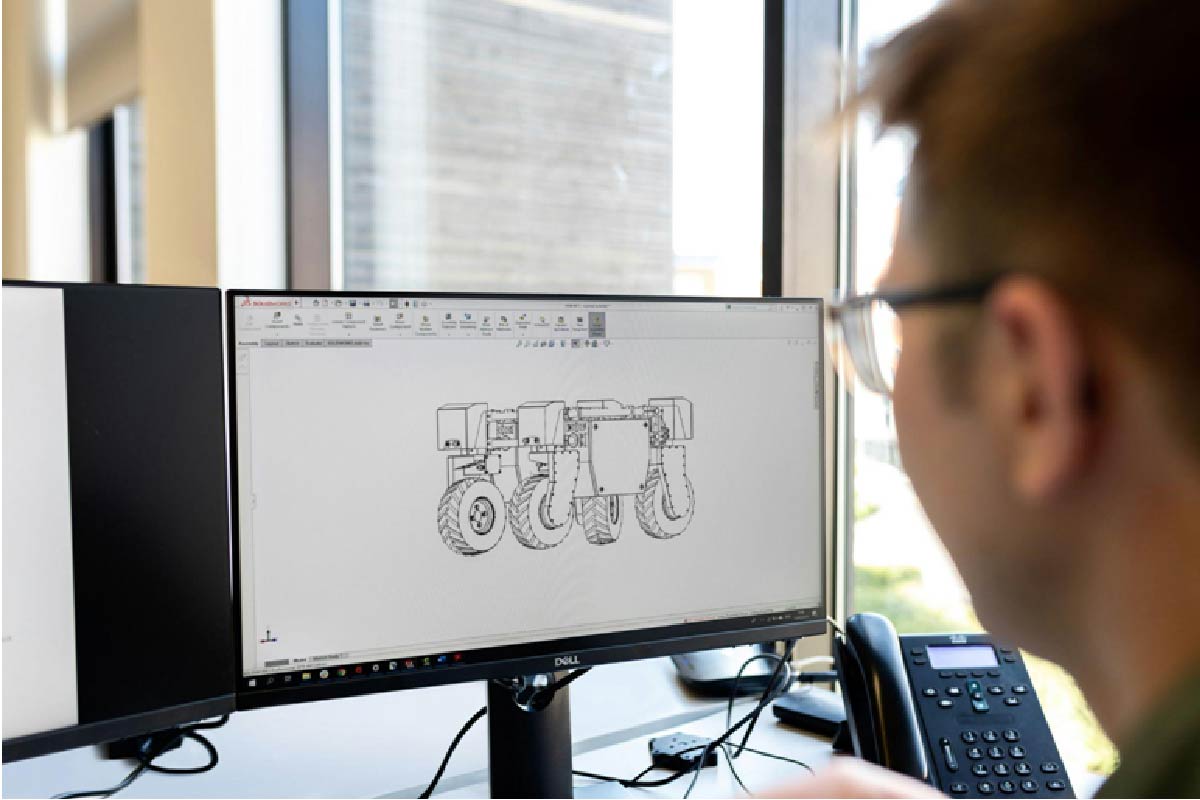
Digital innovation is changing how engineers investigate environmental problems and manage industrial systems.
Sensors, automated monitoring equipment, and data analytics platforms allow facilities to collect information about operating conditions more efficiently.
In water treatment, digital systems can monitor parameters such as flow rates, dissolve
d oxygen, temperature, and selected indicators of water quality.
This information helps operators recognize performance changes and make more informed adjustments.
Engineering students increasingly benefit from learning how to interpret monitoring data, develop digital models, and understand automated control systems.
Simulation software can also support design decisions by allowing students to evaluate different operating scenarios before physical infrastructure is constructed.
However, technology should complement engineering judgment rather than replace it. Digital models depend on accurate information, appropriate assumptions, and careful interpretation.
Teaching students to recognize these limitations helps prevent excessive reliance on automated recommendations.
As environmental infrastructure becomes more connected, combining digital skills with traditional engineering knowledge will become increasingly valuable.
Encouraging Innovation Through Hands-On Projects
Practical engineering projects can help students develop the confidence required to solve unfamiliar environmental challenges.
Classroom assignments often involve clearly defined problems with expected answers. Real engineering situations are more complicated because information may be incomplete and several possible solutions may exist.
Project-based learning introduces students to these uncertainties.
A university team might design a small water filtration system, evaluate energy efficiency in a building, or investigate methods for reducing material waste.
Such projects encourage students to identify constraints, compare alternatives, and explain their decisions.
Collaboration also becomes important because environmental challenges rarely fall within one engineering specialty.
Mechanical engineers may contribute equipment design, chemical engineers may evaluate treatment processes, and electrical engineers may develop monitoring systems.
Working together helps students understand how different technical perspectives contribute to a successful outcome.
Projects involving local businesses or public institutions can make the experience even more valuable by introducing realistic budgets, schedules, and operational expectations.
Understanding Environmental Regulations and Professional Responsibility
Engineering decisions can have consequences that extend far beyond the facilities where systems are installed.
Poorly designed infrastructure may contribute to pollution, inefficient resource consumption, or avoidable safety risks. Future engineers must therefore understand their professional responsibilities alongside their technical duties.
Environmental regulations establish requirements for controlling emissions, managing waste, protecting water resources, and operating industrial facilities.
Although specific standards differ between countries and industries, compliance is an essential consideration in environmental engineering.
Students should learn how regulations influence design choices, documentation, monitoring, and operational procedures.
Professional ethics is equally important. Engineers may encounter situations where financial pressures conflict with environmental objectives or long-term safety.
Understanding how to evaluate these conflicts encourages responsible decision-making.
Educational programs can use case studies to demonstrate how technical failures, inadequate oversight, or poor communication contribute to environmental problems.
These lessons help future professionals recognize that successful engineering involves protecting public interests as well as meeting project requirements.
Building the Skills Needed for Sustainable Engineering Careers
Environmental engineering continues to evolve as industries adopt new technologies and respond to changing sustainability expectations.
Future professionals will need the flexibility to learn unfamiliar methods, evaluate emerging solutions, and collaborate with specialists from different backgrounds.
Communication skills are particularly valuable. Engineers frequently explain technical recommendations to managers, regulators, community representatives, and other stakeholders who may not share their scientific expertise.
Clear communication helps ensure that environmental risks and proposed solutions are understood.
Economic awareness also matters. Sustainable infrastructure must be financially realistic, maintainable, and suited to the conditions where it operates.
Students who understand lifecycle costs, resource efficiency, and long-term maintenance requirements are better prepared to evaluate complete engineering solutions.
Internships, industry partnerships, and practical research projects can further support professional development by exposing students to real operational challenges.
Ultimately, preparing future engineers requires more than teaching established technical methods. It involves developing professionals who can think critically, collaborate effectively, and approach environmental responsibilities with creativity and care.
By combining scientific education, practical experience, digital skills, and ethical decision-making, engineering institutions can help prepare graduates to address modern environmental challenges and contribute to more sustainable industrial development.
