
Student life can become surprisingly repetitive. Classes, assignments, commuting and part-time work often fill the day, while the spaces between those responsibilities are treated as little more than waiting time.
That is a missed opportunity.
Campuses and education-focused environments work better when students have places where they can sit without needing to study, buy something or immediately move on. Informal social spaces can support conversation, friendships and short periods of rest between more demanding parts of the day.
The strongest spaces are rarely complicated. They simply give students enough comfort, flexibility and atmosphere to stay for a while.
Make Outdoor Areas Feel Worth Using
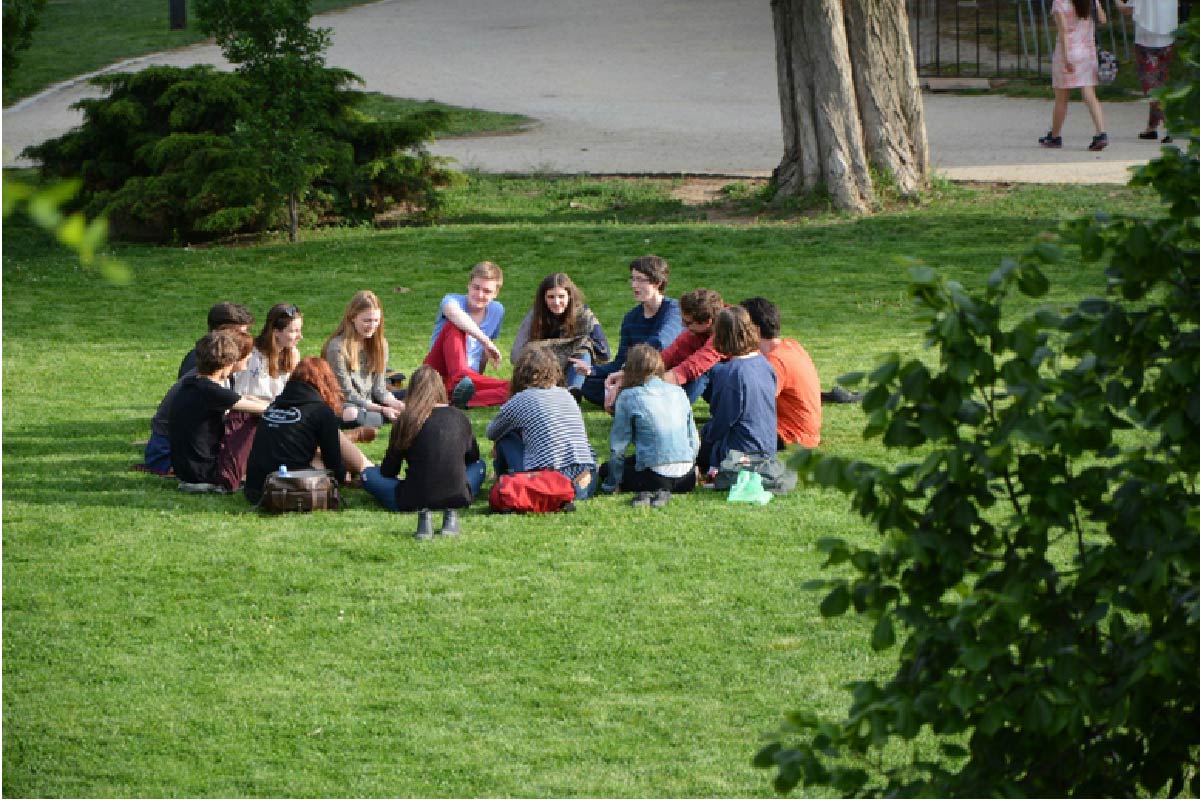
Many campuses have courtyards, patios or open areas that technically count as student space but are rarely used for long.
The problem is often comfort rather than location.
Better seating, shelter and a stronger sense of warmth can make outdoor areas much more inviting. Looking at ideas from royalfirepits.com can be useful when considering how fire features or similar focal points might help define a social zone and make it feel more appealing during cooler periods.
The broader design lesson is that students need a reason to remain outside.
An empty paved area is unlikely to encourage much interaction, while a clearly defined gathering point immediately gives the space a purpose.
Give Students Different Types of Seating
Not every student wants to use a shared space in the same way.
One person may want to sit alone for ten minutes, while another group may want somewhere to talk between classes.
That means variety matters.
Benches, small tables, soft seating and larger group arrangements can all serve different needs within the same area.
Furniture should also be flexible enough to support both quiet and social use.
A space becomes much more useful when students can choose whether they want conversation, individual downtime or somewhere to complete a small task without returning to a formal classroom.
Create Places That Do Not Feel Like Classrooms
Educational spaces do not all need the same atmosphere.
If every room uses identical furniture, lighting and layouts, students may struggle to mentally separate study time from rest.
Relaxation areas should feel noticeably different.
Softer lighting, more comfortable seating and warmer materials can help create that distinction.
Even small changes in colour, texture and furniture arrangement can signal that the space has a different purpose.
That psychological separation matters.
Students are more likely to recharge when they do not feel as though they are simply sitting in another version of the classroom they just left.
Support Casual Social Interaction
Not every meaningful student connection begins through a formal club or organised event.
Some start because two people regularly sit in the same area between classes.
Spaces can support those interactions by avoiding layouts that isolate everyone.
Small clusters of chairs and shared tables make casual conversation easier without forcing it.
Visibility helps too.
A social area placed along common routes is more likely to attract regular users than one hidden in an isolated corner of the campus.
The goal is not to manufacture interaction.
It is to create conditions where students can naturally recognise familiar faces, stop for a conversation and gradually feel more connected to the wider institution.
Think About Comfort Across the Whole Day
A space that works at noon may not work early in the morning or later in the afternoon.
Sun, wind, temperature and lighting can all change how comfortable an area feels.
That is why effective student spaces need to be considered across different times of day rather than judged from a single design perspective.
Shade can make outdoor seating usable during warmer periods, while lighting can extend its usefulness after the daylight begins to fade.
Indoor spaces need the same attention.
Temperature, noise and access to charging points can influence whether students stay for twenty minutes or leave almost immediately.
Make Recharge Time Feel Legitimate
Students often feel pressure to treat every free period as productive time.
That can make rest seem wasteful even when it would improve concentration later.
Giving relaxation spaces a clear place within the campus environment sends a different message.
It acknowledges that breaks are part of a functioning academic routine rather than something that happens only when all work is finished.
A short conversation, a quiet coffee or ten minutes outside can make the next class easier to approach with more focus.
Good student spaces do not need to be extravagant.
They need to be comfortable, accessible and clearly different from formal learning environments.
When students have more places to slow down, connect with others and reset between responsibilities, the campus becomes more than a collection of classrooms. It becomes a place where everyday student life can feel more balanced.
