
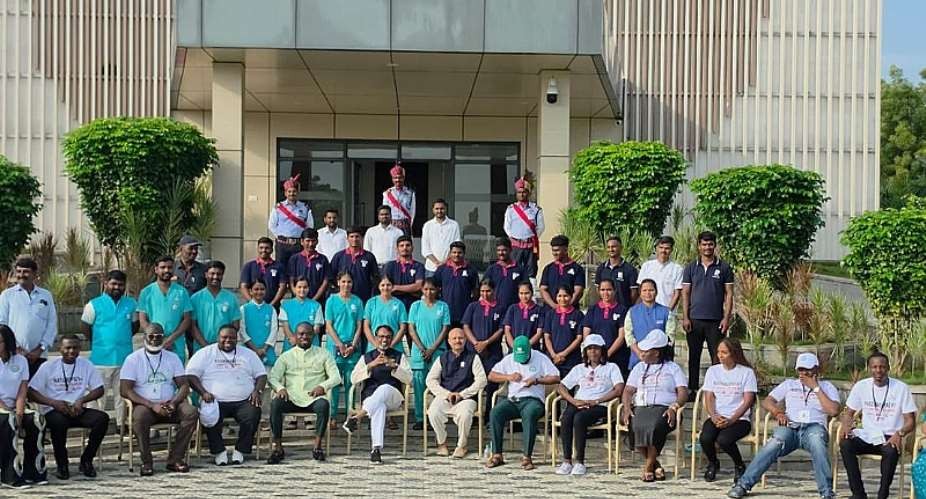
The International Association for Quality Assurance in Pre-Tertiary and Higher Education (QAHE) has entered into a Memorandum of Understanding with the African Naturopathic Federation (ANF) on strategic cooperation in naturopathy and complementary and alternative medicine (CAM) education. QAHE Chairperson Natasha Perkins signed the instrument on 22 September 2026. Prof. Raphael Nyarkotey Obu, Esq, Founding President of ANF, signed on 25 September 2026. The African Naturopathic Federation (ANF) is a continental body established on March 12, 2026, by 21 practitioners across 11 African nations to unify and strengthen the naturopathic profession.
ANF is an African professional federation with its registered office in Ghana and headquarters in Namibia. It seeks coherent, context-sensitive educational standards for naturopathy and CAM across the continent. QAHE undertakes educational quality assurance and accreditation. The MoU records the Parties’ intention to explore technical cooperation on educational standards, institutional development and quality assurance while respecting national education and health-profession regulatory requirements.
The cooperation is framed around four objectives. The Parties intend to develop voluntary educational benchmarks for participating African naturopathy and CAM programmes, covering learning outcomes, minimum educational resources, supervised clinical learning and assessment. They aim to strengthen institutional capacity in internal quality assurance, governance, faculty development, student protection and evidence-informed teaching. Eligible institutions may apply independently for QAHE accreditation; the MoU gives no promise of approval or preferential treatment. The Parties also intend to promote dialogue, research, workshops and appropriate international academic collaboration.
Areas of work include joint examination of competency frameworks, programme levels, training hours, clinical supervision, assessment, ethics and patient safety, with input from qualified discipline specialists. The Parties may exchange non-confidential guidance on self-evaluation, programme review, governance, complaints, learning resources and continuous improvement. Capacity-building activities such as seminars, assessor training, educator development, conferences, publications and research may follow an agreed work plan and budget. Nyarkotey College of Holistic Medicine in Ghana is identified as a potential pilot participant for readiness assessment or other agreed support; any such involvement, and any accreditation application, requires separate written arrangements and consent. Other ANF member institutions may take part only through separately approved activities.
Subject to QAHE’s written acceptance and ANF’s governance rules, QAHE may nominate up to two suitably qualified representatives as external technical advisers to ANF’s Education Committee for renewable one-year terms. Advisers may contribute to meetings, technical reviews, capacity building and draft standards. They have no authority to bind either organisation, vote on ANF governance, or act as statutory regulators. The Committee shall not conduct, influence or pre-judge QAHE accreditation decisions. QAHE retains sole control of its assessment teams, criteria, processes and outcomes.
The MoU is explicit about what it does not do. It confers no accreditation, professional registration, statutory recognition or permission to practise. ANF membership, Committee participation or pilot status creates no entitlement to QAHE accreditation. The Parties shall not present QAHE accreditation as equivalent to recognition by a national education regulator, ministry, statutory professional council or the competent authorities of another country. Neither Party may promise professional licensure, practice rights, degree-awarding powers or third-party recognition of qualifications. Voluntary benchmarks are intended to align with applicable national law and must not authorise clinical procedures beyond lawful scope of practice or appropriate supervision.
Each Party will designate a focal person within 30 days of the effective date and aims to meet at least twice a year. An indicative first-year work plan covers confirmation of focal persons and adviser nominations, mapping of existing African educational standards, a joint faculty and quality-assurance workshop, stakeholder consultation on draft benchmarks, and review of first-year results. Unless separately agreed in writing, each Party bears its own costs. The arrangement runs for three years from the last signature unless renewed or terminated earlier.
QAHE regards the MoU as a structured channel for technical dialogue with a continental professional body, not as a shortcut to accreditation. Institutions that later apply will be assessed under QAHE’s published process, eligibility criteria and independent decision. Further information is available at https://www.qahe.org.
